A big forehead can change how the proportions of the whole face look, and many people try to hide it with a fringe or make-up. In most cases a high hairline is behind it, sometimes a receding hairline or low-set brows.
What helps depends on the cause. Here you can read how the forehead fits into the proportions of the face, what hairstyle, make-up and hair transplants can do, and when a forehead reduction (hairline lowering) may be considered, along with its limits.
In short
- The face is often described in three parts: hairline to brows, brows to the base of the nose, and nose to chin. A forehead looks big when the upper third is clearly longer than the other two.
- A high forehead is usually inborn; a receding hairline or low brows can also make it look bigger.
- A fringe, make-up and a hair transplant can lower the visible hairline; a hair transplant builds density gradually.
- Forehead reduction lowers the hairline in one operation; in a series of 820 operations it was shortened by 25.5 mm on average [1].
- Temporary numbness of the scalp is very common afterwards; in a smaller series it affected all patients and resolved within two months [2].
When Does a Forehead Look Big?
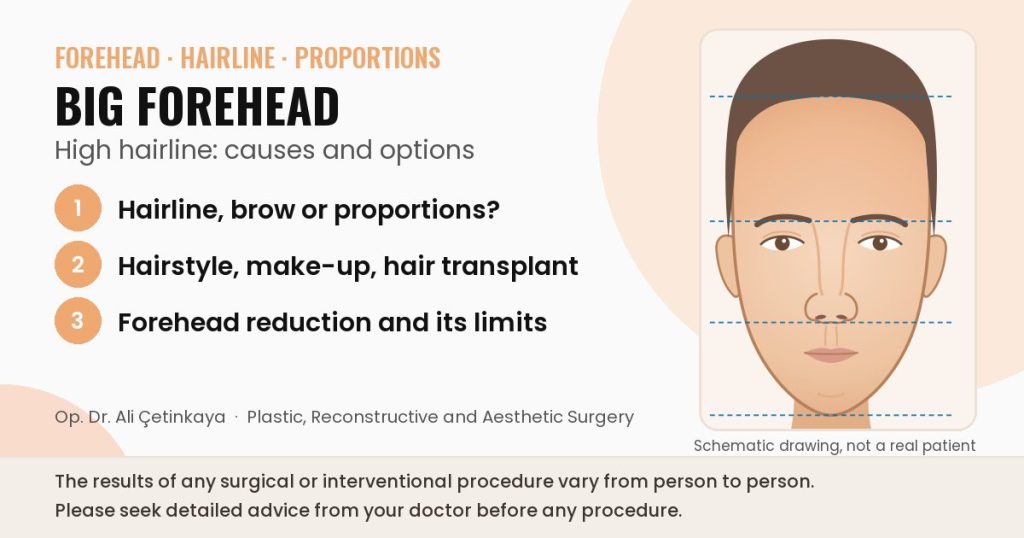
A forehead looks big when it is clearly taller than the middle and lower parts of the face. In aesthetics, the face is often divided into three roughly equal thirds: from the hairline to the brows (the forehead), from the brows to the base of the nose, and from the base of the nose to the chin. The more similar these thirds are, the more balanced the face usually looks.
This is only a guide, not a norm: faces differ widely, and a slightly taller forehead is common and natural. It is also worth telling height and width apart: a “high” forehead is about where the hairline sits, a “wide” one about the distance between the temples.
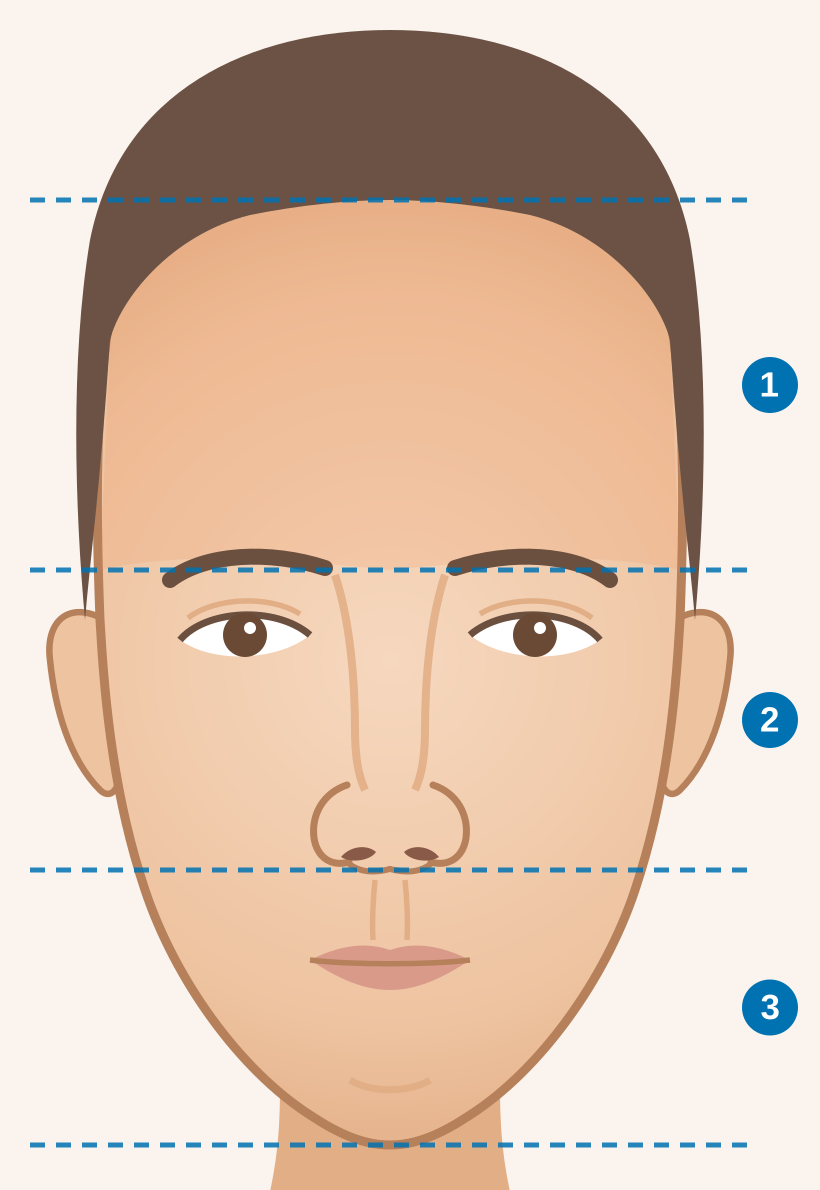
- 1Upper third: hairline to brows (forehead)
- 2Middle third: brows to base of the nose
- 3Lower third: base of the nose to chin
What Causes a Big Forehead?
- A naturally high hairline: the most common cause; it often runs in families.
- A receding hairline: hair loss at the front and temples, more common in men but also in some women, pushes the hairline back over time.
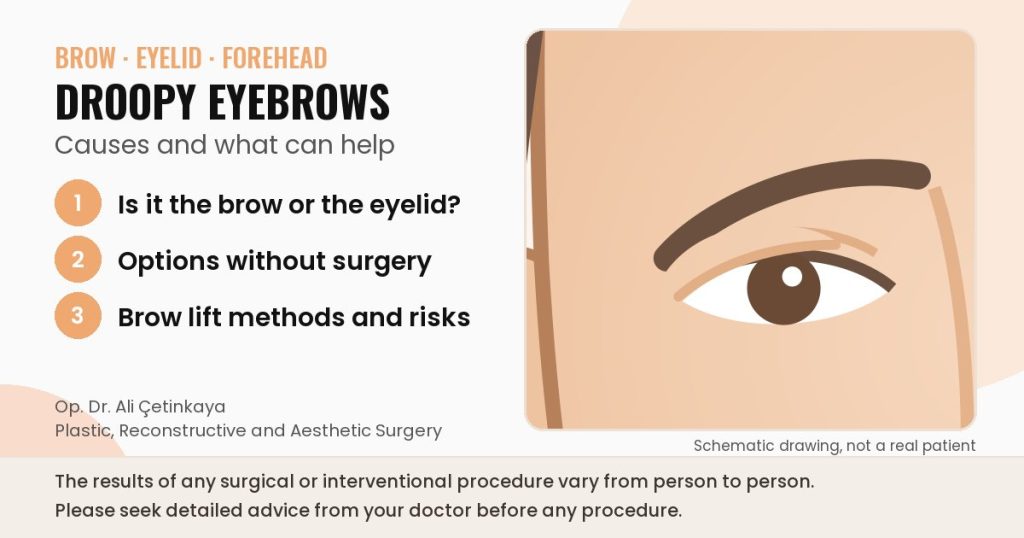
- Low-set brows: if the brows sit low, the distance between hairline and brows increases; see droopy eyebrows.
- Proportions: a short midface or chin can make the forehead look relatively bigger.
Sudden or patchy hair loss is a different issue and should be checked by a dermatologist before any cosmetic plan.
What Helps Without Surgery?
- Hairstyle: a fringe, side parting or volume at the hairline makes the forehead look shorter.
- Make-up: a slightly darker shade along the hairline and temples visually reduces the forehead.
- Hair transplant: moves hair follicles forward to lower or round the hairline. Density builds up gradually and more than one session may be needed; it is often an option for men with a receding hairline.
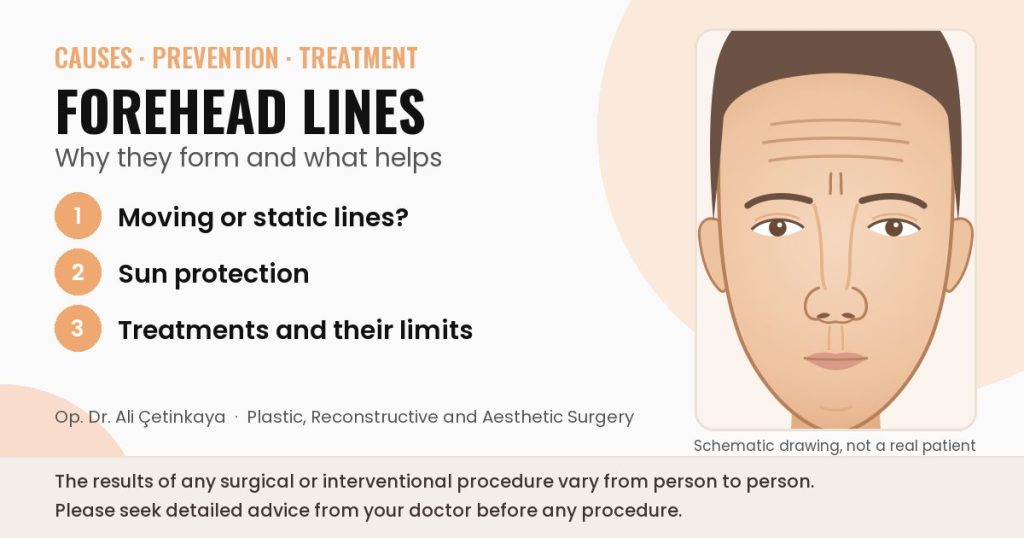
- Botulinum toxin: softens forehead lines and can lift low brows slightly; it does not shorten the forehead. See forehead lines.
These measures change how the forehead looks but not its actual height.
Forehead Reduction (Hairline Lowering)
In a forehead reduction, a strip of hairless forehead skin is removed just in front of the hairline and the hair-bearing scalp is moved forward. The incision follows the hairline and is usually shaped so that hair can later grow through the scar. Unlike a hair transplant, the hairline is lowered in a single operation with its existing density [3].
How much can be shortened depends on the starting height and on how mobile the scalp is. In a series of 820 consecutive forehead reductions with the same technique, the forehead was shortened by 25.5 mm on average (range 10–50 mm); patients rated their satisfaction at 3.98 on a scale of 1 to 5 [1]. If the scalp is not mobile enough for the desired change, a two-stage approach with a tissue expander or a combination with a hair transplant may be discussed. Read more about the procedure under forehead reduction surgery.
If the brows also sit low, a brow lift can be considered at the same time; see eyebrow lift.
Who Is It Suitable For?
Good candidates usually have a stable hairline without ongoing hair loss and a mobile scalp; according to a review, these are most often women [3]. With progressive hair loss, especially in men, the hairline may continue to recede and the scar could become visible later, so the plan is different. Whether surgery, a hair transplant or a combination fits is decided at the examination.
Risks and Warning Signs
Swelling and bruising of the forehead and around the eyes are common in the first days. Numbness of the scalp behind the incision is very common: in a series of 21 patients it affected everyone and resolved in all cases within two months [2]. Temporary hair shedding near the scar (“shock loss”), a visible scar, asymmetry and, rarely, infection or wound-healing problems are possible.
Contact your treatment team the same day if after the operation you have a fever, increasing swelling or redness, discharge of pus, or a darkening area of skin along the incision. With sudden severe headache, vision problems or confusion, call emergency services straight away (112 in Turkey, 999 in the UK).
Is It Covered by Insurance?
A forehead reduction for cosmetic reasons is usually not covered by public health systems or private insurers, including the NHS. Clarify costs and follow-up before planning, especially if the operation is to take place abroad.
Frequently Asked Questions
Can you make your forehead smaller without surgery?
Not its actual height. A hairstyle, make-up or a hair transplant can lower the visible hairline; only surgery shortens the forehead itself.
Forehead reduction or hair transplant?
Forehead reduction lowers the hairline in one operation with the existing density. A hair transplant moves follicles forward gradually and suits a receding hairline better. Sometimes both are combined.
Is the scar visible?
The scar lies along the hairline and hair usually grows through it over time. It is red at first and fades over months; how visible it remains varies, and it can become more visible if the hairline recedes later.
Can men have a forehead reduction?
Yes, if the hairline is stable. Because hair loss often continues in men, the risk of a later visible scar is assessed carefully; a hair transplant may be the better option.
Does a forehead reduction last?
The removed skin does not grow back, so the hairline stays lower. Natural hair loss or ageing can still change the area over time.
Personal Assessment

References
- Ekizceli C, Hocaoğlu E. Forehead reduction: a retrospective study of 820 consecutive cases. Aesthetic Plast Surg. 2026;50(5):1663–1675. doi:10.1007/s00266-025-05421-7
- Espinosa J, Solís L, Cobo R, Heredia N, Puerta M, Corredor D, Fonseca C. Forehead reduction surgery with hairline advancement. Facial Plast Surg. 2025;41(1):117–122. doi:10.1055/a-2235-7312
- Arnaoutakis D. Hairline-lowering surgery. Facial Plast Surg Clin North Am. 2026;34(1):97–102. doi:10.1016/j.fsc.2025.08.003
This article is for general information and does not replace a medical examination. The results of any surgical or interventional procedure vary from person to person. Please seek detailed advice from your doctor before any procedure.