Medical review: This article has been reviewed by Op. Dr. Ali Çetinkaya, specialist in plastic, reconstructive and aesthetic surgery. Last updated:
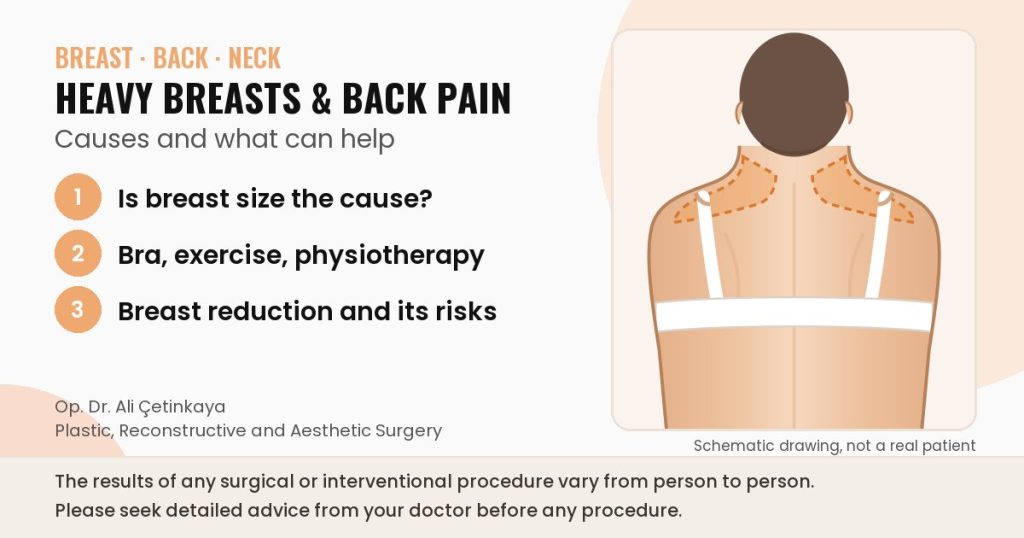
Very large, heavy breasts can put constant strain on the back, neck and shoulders. Many women know the deep grooves left by bra straps, muscle tension, headaches and red skin under the breasts. Doctors call this macromastia or breast hypertrophy.
Back pain, however, has many possible causes. Here you can read how to tell whether it is linked to breast size, what helps without surgery and when a breast reduction may be considered.
In short
- Pain in the upper back, neck and shoulders, strap grooves and skin irritation under the breasts suggest a link with breast size.
- New pain that spreads into the arms or legs, or comes with numbness, should be checked for other causes first.
- A well-fitting bra, exercise and physiotherapy often relieve symptoms but do not change the weight of the breast tissue.
- After breast reduction, reviews describe less musculoskeletal pain and fewer headaches, and better sleep and breathing [1].
- In a study of 209 women, quality of life improved within three months and stayed stable at twelve months [2].
Signs of a Link With Breast Size
- Pain in the upper back, neck or shoulders that gets worse towards the end of the day or with activity.
- Deep, sometimes painful grooves from the bra straps on the shoulders.
- Red, moist or inflamed skin in the fold under the breasts.
- Rounded shoulders and a stooped posture.
- Difficulty with sport or with finding clothes that fit.
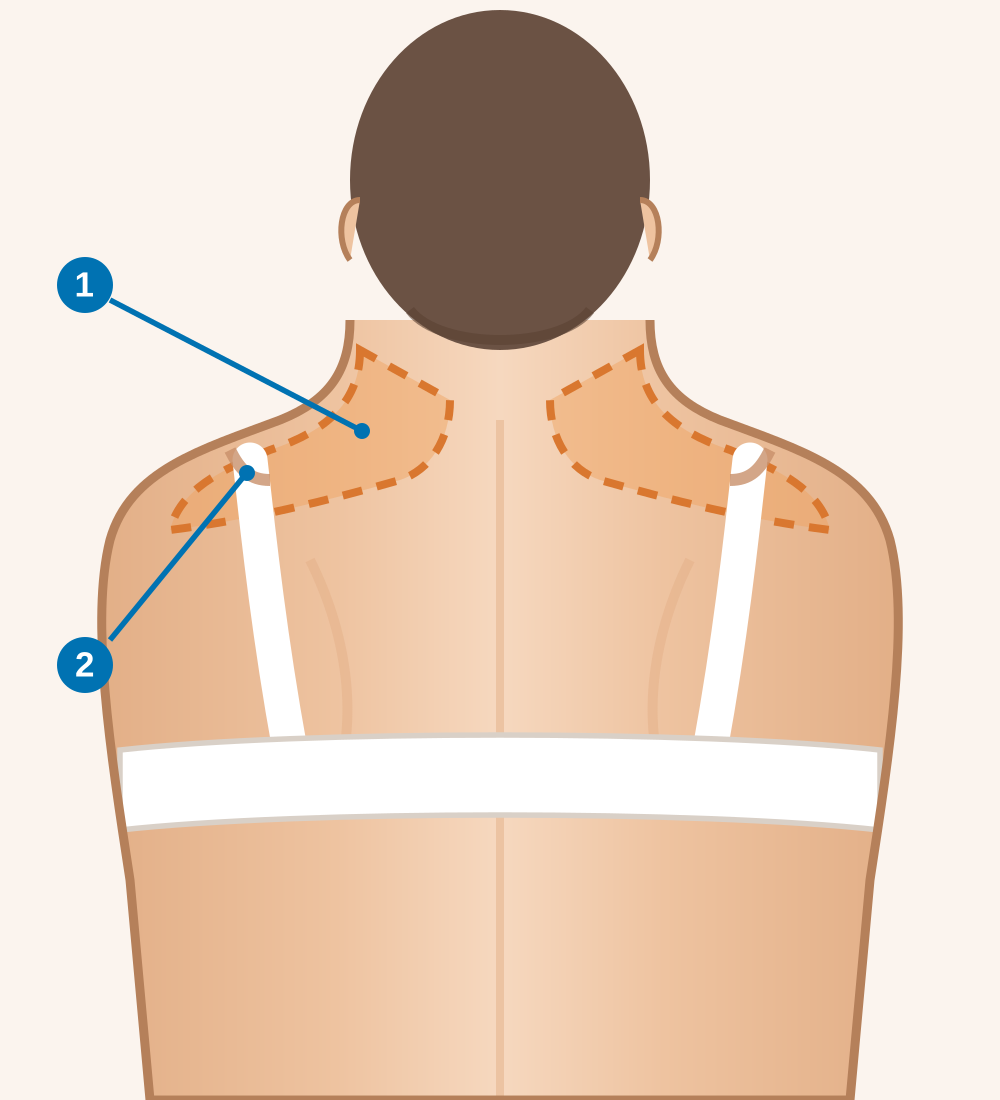
- 1Neck and shoulder area carrying the load
- 2Groove left by the bra strap on the shoulder
Important: if back or neck pain is new, spreads into the arms or legs, or comes with numbness or weakness, have it checked by a doctor first for another cause such as a disc problem. Sudden severe pain with weakness, loss of bladder or bowel control, or chest pain needs emergency care (112 in Turkey, 999 in the UK).
What Helps Without Surgery?
| Measure | What it can do |
|---|---|
| A well-fitting bra | Wide, padded straps and a firm band spread the weight; a professional fitting is worthwhile |
| Sports bra | Reduces breast movement during exercise |
| Back and posture training, physiotherapy | Strengthens the back and shoulder muscles and can ease symptoms |
| Weight loss if overweight | The breasts can get smaller if they contain a lot of fat; the effect varies |
| Skin care in the fold under the breasts | Keep it dry, wear breathable fabrics; have inflammation treated |
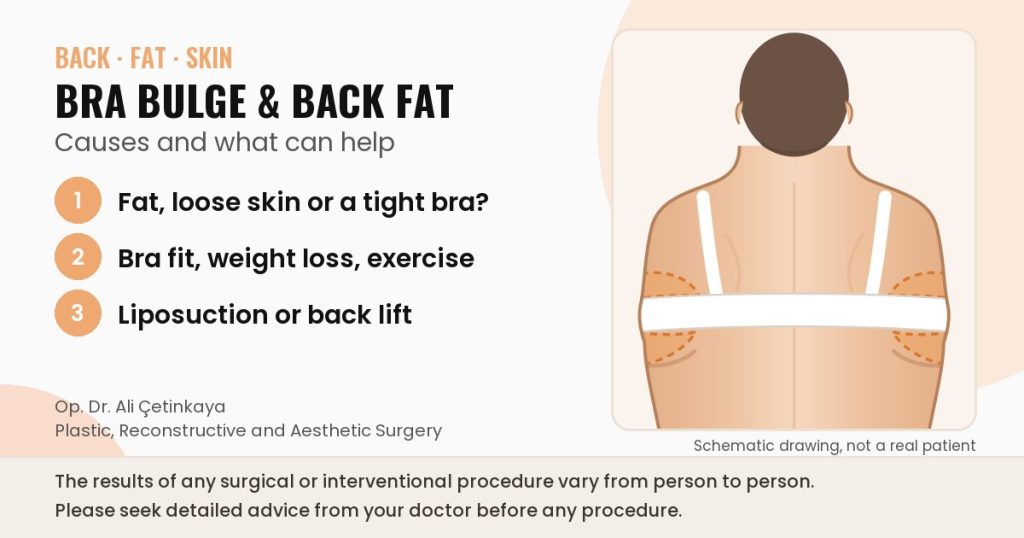
These measures often relieve symptoms but do not change the weight of the breast tissue itself. A good band also helps against rolls on the back; see bra bulge and back fat.
When May Breast Reduction Be Considered?
If symptoms persist despite these measures and breast size is the likely cause, a breast reduction (reduction mammaplasty) may make sense. Gland and fat tissue and excess skin are removed, the breast is lifted and the nipple is moved higher.
A systematic review describes improvements after breast reduction in musculoskeletal pain, headaches, sleep and breathing, as well as in self-esteem and quality of life [1]. In a prospective study of 209 women who had surgery, health-related quality of life improved clearly within three months and remained stable at twelve months; in a comparison group of women with large breasts who did not have surgery, it did not change [2]. How much symptoms ease in an individual case cannot be predicted with certainty.
How Does a Breast Reduction Work?
The scar runs around the areola and vertically downwards and, depending on the technique, also in the fold under the breast. Removed tissue does not grow back, but weight changes, pregnancy and age continue to affect the breast. Techniques, healing and risks, including sensation and breastfeeding, are described in detail on our breast reduction page. If you want to breastfeed later, see breastfeeding after breast surgery.
Risks and Warning Signs
Possible complications include wound-healing problems, especially where the scars meet, bleeding, infection, changes in nipple sensation, asymmetry and noticeable scarring. A meta-analysis of 61 studies with 71,149 patients found a higher risk of complications with a body mass index of 30 or more, smoking, diabetes and previous radiotherapy [3].
Contact your treatment team the same day if after the operation you have a fever, increasing redness or swelling of one breast, discharge of pus or a dark discoloration of the nipple. If you suddenly become short of breath or have chest pain, call emergency services straight away (112 in Turkey, 999 in the UK).
Is It Covered by Insurance?
A breast reduction can be medically justified when symptoms are marked. Whether a public health system or insurer pays is decided case by case; medical reports and evidence that non-surgical treatment has not helped are often required. In the UK this depends on local NHS criteria. If the operation is to take place abroad, clarify the conditions beforehand.
Frequently Asked Questions
Can large breasts really cause back pain?
Yes, that is possible. The weight pulls the shoulders and upper back forward and strains the muscles. Other causes should still be ruled out by a doctor.
Does losing weight make large breasts smaller?
Partly. If the breast consists mainly of fat, it often gets smaller with weight loss. Gland tissue hardly responds to weight loss.
Can neck problems cause pain in the breast?
Pain from the neck or upper back can sometimes be felt in the chest wall. New or one-sided breast pain, a lump or chest pain should always be checked by a doctor rather than put down to breast size.
From what age is a breast reduction possible?
Usually once the breasts have stopped growing. In young women with severe symptoms, the timing is discussed individually.
Can I breastfeed after a breast reduction?
Often yes, but not always fully. It depends on the technique and on how much gland tissue stays connected to the nipple.
Personal Assessment

References
- Singh KA, Losken A. Additional benefits of reduction mammaplasty: a systematic review of the literature. Plast Reconstr Surg. 2012;129(3):562–570. doi:10.1097/PRS.0b013e31824129ee
- Crittenden T, Watson DI, Ratcliffe J, Griffin PA, Dean NR. Does breast reduction surgery improve health-related quality of life? A prospective cohort study in Australian women. BMJ Open. 2020;10(2):e031804. doi:10.1136/bmjopen-2019-031804
- Ran R, Wang H, He X, Li J, Yu M, Mou E, Liu C. Risk factors for complications after reduction mammaplasty: a systematic review and meta-analysis. Eur J Med Res. 2025;30(1):440. doi:10.1186/s40001-025-02723-z
This article is for general information and does not replace a medical examination. The results of any surgical or interventional procedure vary from person to person. Please seek detailed advice from your doctor before any procedure.