



A facelift (rhytidectomy) corrects sagging and jowls in the face and neck by repositioning the skin together with the deeper support layer (SMAS). Below you will find what is assessed at a consultation in Istanbul, the techniques, recovery, risks and how to plan a facelift in Turkey.
| In Brief | Details |
|---|---|
| Procedure | Facelift (rhytidectomy): repositioning the skin and SMAS |
| Duration | Usually 3–5 hours; varies with technique and scope |
| Anesthesia | General anesthesia (sometimes sedation + local) |
| Where | Hospital operating room (Memorial Göztepe Hospital, Istanbul) |
| Hospital stay | Usually 1 night |
| Back to daily life | Gradual; for most people 10–14 days, varies individually |
| Scars | There are scars along the incision line, planned around the ear and hairline |
| How long it lasts | Ageing continues; how long the correction holds varies |
Contents— 22 sections
What Is a Facelift?
Over time skin elasticity decreases and the face’s support tissues (SMAS) and fat pads drift downward, producing jowls, a blurred jawline, deeper nasolabial (nose-to-mouth) folds and neck laxity. Fillers and threads do not move sagging tissue back into place; they address different problems. A facelift removes excess skin, but its main work is repositioning the SMAS layer up and back.
For the upper face (forehead, brow, temples) an endoscopic facelift or brow lift is used; for the neck a deep plane neck lift may be added. For approaches that also address the midface, see deep plane facelift.
Which Areas Does Ageing Affect?
Who Is a Good Candidate — and Who Is Not?
Suitable candidates
- Marked facial/neck sagging, jowls and a lost jawline
- Reasonable skin elasticity and good general health
- Non-smokers or those able to quit
- Realistic goals who want a natural result
Situations to postpone/assess
- Uncontrolled chronic illness or a bleeding disorder
- Active smoking (wound-healing risk)
- Unrealistic “look 10 years younger” expectations
- Only mild skin change; surgery may be too early
A facelift does not erase age; it corrects sagging so the face looks more rested. Suitability is decided at examination, together with your general health.
Facelift Techniques (Types)
A facelift is not one single operation but a family of approaches. The cards below introduce the options; which one suits you depends on where the sagging is, how marked it is and your skin quality, and is decided at examination.
An approach in which the support tissues are addressed in a deeper plane beneath the SMAS; it was first described in 1990 (Hamra, 1990). Whether it suits you is assessed at examination.
The support layer is reshaped by folding it or removing part of it. The extent is planned individually.
More limited lifts through shorter incisions. They may not suit every type of sagging.
Can be used for specific areas such as the forehead, brow and temples through small incisions. The target area and need for added procedures are assessed separately.
What do studies show? A meta-analysis of 183 studies found no difference between techniques in the risk of permanent nerve injury, while the risk of other complications such as haematoma differed between techniques (Jacono et al., 2019). A 2025 systematic review reported high patient satisfaction with both deep plane and SMAS facelifts (Khoury et al., 2025). These studies are not head-to-head trials and their definitions and follow-up differ, so there is no single best technique for everyone: the choice depends on your anatomy, the degree of sagging and your goals, and is made at examination.
How Facelift Techniques Differ
| Technique | Tissue plane and target area | How is it chosen? |
|---|---|---|
| Deep Plane | Plane beneath the SMAS; midface, jowls, jawline | By anatomy and health assessment, at examination |
| SMAS Plication/Resection | SMAS layer (folding or partial removal); lower face and jawline | By location and degree of sagging, at examination |
| Mini / MACS | Limited SMAS suspension; a smaller area | By whether sagging is limited, at examination |
| Endoscopic | Forehead, brow and temple tissues | By the need for upper-face procedures, at examination |
The table introduces the options; it does not rank the techniques. Recovery time also varies with technique, scope and the individual.
Areas Assessed When Planning a Facelift
These drawings explain changes that can appear in different areas of the face. They do not measure your face, do not diagnose and do not choose a procedure for you; your personal assessment is made at examination.
The examination also looks at the midface and cheek tissue, forehead and brow, eyelids, skin thickness and elasticity, and volume loss.
Facelift Surgery vs Non-Surgical Treatments: How They Differ
Facial rejuvenation treatments do not target the same problem. Tissue sagging, volume loss, expression lines and changes in the skin surface are assessed separately; a surgical facelift and fillers, botulinum toxin or laser treatments are not substitutes for one another.
- Tissue sagging (jowls, neck, midface): surgical options are discussed for tissue that needs repositioning.
- Volume loss: volumising treatments such as fat transfer or fillers may be considered.
- Expression lines: for lines between the brows or around the eyes, botulinum toxin may be considered.
- Skin surface: for spots, fine wrinkles and skin quality, resurfacing such as fractional CO2 laser can be used.
Which method can meet which expectation — with its possible benefits and risks — is decided together with your doctor.
Facelift Results and Their Limits
A facelift repositions tissues that have descended, improving the jawline, jowls, the neck-chin angle and the midface. It does not, on its own, change skin quality, fine wrinkles, volume loss or the upper face, and ageing continues. How the result looks and how long it holds depend on your anatomy, skin, lifestyle and the technique used.
What a facelift alone does not treat
- Skin quality: spots, sun damage, fine wrinkles
- Fine lines around the mouth
- Volume loss in the temples, cheeks and under the eyes
- Forehead lines and a low brow
- Eyelid sagging and under-eye bags
- Expression lines (crow’s feet, frown lines)
- Bone structure, such as a weak chin
Commonly combined approaches
- Volume: fat transfer
- Upper face: brow lift or endoscopic facelift
- Eyes: eyelid surgery
- Neck: neck lift
- Skin surface: regular skin care, sun protection and skin treatments
What affects how long the result lasts?
- Technique and tissue plane: where only the skin is tightened, the effect tends to be shorter; when the SMAS is addressed, the correction usually holds longer.
- Skin quality: thin, sun-damaged or very inelastic skin can relax again sooner.
- Starting point and age: the degree of sagging before surgery also sets the limits of the correction.
- Lifestyle and weight: smoking, unprotected sun and marked weight changes affect the result.
The illustrations on this page and other patients’ results only give an idea. What is realistic for your face is discussed at examination.
How Is a Facelift Performed? (Step by Step)
Planning and incision line
The incision plan varies individually; the temple hairline, the front of the ear, around the earlobe and behind the ear are commonly used.
Skin elevation and SMAS suspension
The skin is gently lifted; the deep support layer (SMAS) is repositioned up and back and fixed.
Excess skin removal and closure
Excess skin is trimmed conservatively so tension sits on the SMAS, not the skin; the layers are closed with sutures.
Planning and marking
Anesthesia
Incision and skin elevation
Lifting the SMAS
Removing excess skin
Closure and dressing
Where Do Facelift Scars Go?
A facelift requires incisions, so there will be scars. The incision line is planned according to the technique and your facial structure; as the first drawing above shows, the temple hairline, the front of the ear, around the earlobe and behind the ear can be used. If the neck is addressed, a small incision under the chin may be added.
How visible a scar remains — its colour and width — varies from person to person; scars are more noticeable in the first months and mature over time. Wound and scar care should follow the written instructions you are given, and protecting the scars from the sun in the first months is important.
Recovery After a Facelift
This timeline is a general guide; recovery varies with technique, skin quality and lifestyle.
When Can I Go Back to Work and Social Life?
Returning to work depends on how physically demanding your job is and how recovery progresses; desk work and heavy physical work are not planned the same way. Returning to social life does not mean recovery is complete; confirm your dates with your surgeon at your check-ups.
When Can I Drive?
Do not drive until the effects of anesthesia have worn off or while taking medication that can affect attention or reflexes. You need to be able to turn your neck comfortably and drive safely; ask your surgeon when you can start.
When Can I Wash My Hair, Shower and Exercise?
This depends on the incision line, dressings, any drains or sutures and added procedures. Follow the written care instructions given at discharge, and return to exercise gradually, starting with light activity and with approval.
How Are Check-ups and Follow-up Planned?
The check-up schedule is not the same for everyone; it is set individually by Op. Dr. Ali Çetinkaya according to the technique, drains and sutures, and how you are healing. Your check-up dates and care instructions are given to you in writing at discharge.
Check-ups take place at the practice in Ataşehir, Istanbul. Removing the dressing, drains and sutures is planned according to how you heal.
You are checked on site before travelling back and cleared to return. Follow-up then continues via WhatsApp: you send photos of your face at agreed times, and a video call is arranged if needed. Consultations are available in Turkish, English and German.
Call or WhatsApp +90 532 663 43 60, or email bilgi@dralicetinkaya.com. Warning signs that need urgent attention are listed in the risks section.
Aftercare: What to Do and What to Avoid
✓ Do
- Keep the head elevated and use cold packs in the first days
- Use the recommended dressing/support garments
- Follow scar care and sun-protection advice
- Attend follow-ups and take medication as directed
✕ Avoid
- Smoking and alcohol (impair wound healing)
- Heavy exercise, bending and straining for ~4 weeks
- Sauna and very hot showers early on
- Exposing scars to the sun in the first months
Possible Risks and Safety
A facelift is a planned operation and, like any surgery, carries risks. Knowing them in advance helps you notice warning signs early:
- Hematoma: Blood collection under the skin; the most common early complication, drained if needed.
- Nerve involvement: Usually temporary weakness of expression or altered sensation; permanent injury is rare.
- Scars and hairline: Scars are planned in less visible areas; occasionally a more visible scar or hair thinning at the incision line can occur.
- Wound-healing issues: Especially in smokers, the skin edge may heal slowly.
- Asymmetry: Small differences between the two sides can occur and are taken into account in planning.
- Infection: Rare; managed with sterile technique and follow-up.
In published reviews, haematoma is the most frequently reported complication of facelift surgery, followed by unfavourable scarring and temporary nerve weakness (Fang and de la Torre, 2025). In a review of 27 studies with 6,086 patients, temporary facial nerve weakness was reported in 0.85% and skin necrosis in 0.41%; permanent nerve injury was very rare (Mortada et al., 2024). Rates depend on the technique, the patient and how complications are defined.
Smoking and nicotine are linked to wound-healing problems; if you smoke, discuss a plan to stop with your doctor. Blood thinners are adjusted with your doctor’s approval. Source: ASPS — Facelift.
Which Symptoms After Surgery Need Attention?
Swelling, bruising, tightness, numbness and slight oozing in the first days are an expected part of healing. The signs below are not; if you notice them, contact the clinic without waiting for your next check-up.
Call immediately
- Rapidly increasing, hard swelling on one side of the face or neck with increasing pain or tightness
- Bleeding that soaks the dressing and does not stop with pressure
- Skin near the incision turning dark purple, grey or black
- Difficulty breathing or swallowing, chest pain, sudden shortness of breath, or one-sided leg swelling and pain — call emergency services (112 in Turkey)
Let us know the same day
- Fever of 38 °C or above, chills
- Increasing redness, warmth, pus or a bad smell at the incision
- Wound edges opening
- Pain that persists or increases despite prescribed medication
- New or increasing weakness of facial movement (smiling, raising the brows, closing the eyes)
- Being unable to take medication or fluids because of nausea or vomiting
Preparing for Surgery
Skin quality, degree of sagging, health and expectations are assessed; the technique is chosen.
Smoking is stopped in advance where possible; blood thinners are adjusted with approval.
Necessary blood tests and an anesthesia review are done.
Suitable time off and accommodation are planned for recovery.
How Are Medication and Smoking Assessed?
Tell your doctor about all prescription and over-the-counter medicines, herbal products and supplements you take. Any adjustments needed for bleeding and anesthesia are planned by the surgeon together with the relevant doctors; do not stop any medication on your own. If you smoke or use nicotine, discuss when to stop and how it affects wound healing with your doctor.
Expected Change (Medical Illustration)
The drawing below is an informative medical illustration of the change a facelift aims for; it is not a real patient’s before-and-after photo.
Illustrations are for information; personal results vary with anatomy, skin quality and technique and are not guaranteed. Ask your surgeon for detailed information before the procedure.
Video: Op. Dr. Ali Çetinkaya on Facelift Planning
Op. Dr. Ali Çetinkaya explains why every facelift should be planned individually; more on our channel:
What to Check When Choosing a Clinic/Surgeon
Before deciding, it helps to have clear answers to these questions:
- Specialty: Is the operating surgeon a specialist in plastic, reconstructive and aesthetic surgery? Specialty and society membership can be checked in public registers.
- Where and anesthesia: In which hospital will the operation take place, and who will give the anesthesia?
- The plan: Has it been clearly explained which technique is suggested, why, and whether added procedures are needed?
- Risks and follow-up: Have the risks, where and with whom check-ups take place, and whom to contact if there is a problem been given to you in writing?
- Fees: Ask in writing what the fee includes; do not decide on price alone.
Op. Dr. Ali Çetinkaya: Specialty and Professional Details
- Specialty: Specialist in Plastic, Reconstructive and Aesthetic Surgery (2017); working in plastic surgery since 2012 (including specialty training).
- Society membership: Turkish Society of Plastic, Reconstructive and Aesthetic Surgeons (TPRECD) — member record.
- Operations: Memorial Göztepe Hospital, Istanbul.
- Consultations: Ataşehir, Istanbul — contact and address.
- Languages: Turkish, English, German.
Full education and career: biography.
Planning a Facelift in Turkey: Consultation, Surgery and Follow-up
If you are travelling to Istanbul for a facelift, plan the timing of the consultation, the possible operation and the post-operative check-ups with the surgeon in advance. How long you stay in Istanbul depends on the procedure and how your recovery progresses; you are checked on site before travelling home.
- 1First contact. Message us on WhatsApp or call. Consultations are available in Turkish, English and German.
- 2Preliminary medical review. You share photos or join a video call and tell us about your health, medicines and previous treatments. This gives preliminary information only and does not replace a face-to-face examination.
- 3Written plan. If surgery may be suitable, you receive the planned procedure(s), the hospital, the type of anaesthesia and what the fee includes in writing (see the checklist below).
- 4Examination in Istanbul. You are examined in person at the practice in Ataşehir; the plan is confirmed or changed after the examination.
- 5Surgery and hospital stay. Surgery takes place in a hospital operating room (Memorial Göztepe Hospital), usually under general anaesthesia, with usually one night in hospital.
- 6Check-up before you fly. Stay in Istanbul until the surgeon has checked you and confirmed that you can travel; the expected length of stay is discussed at the consultation.
- 7After you return home. Agree in advance how you will send photos for remote follow-up and how to reach the clinic if you notice a problem. For the warning signs, see “Which Symptoms After Surgery Need Attention?” above; in an emergency, contact local emergency services first.
What Determines the Cost of a Facelift in Turkey?
The cost of a facelift varies individually and is given after examination, according to the planned procedure. The consultation looks at your health, facial structure, previous treatments and expectations. If surgery is considered, the scope of the procedure, type of anesthesia, the hospital and the follow-up are explained to you.
The main factors are the technique, whether added procedures such as a neck lift or eyelid surgery are planned, and the length of the hospital stay. Added procedures are not necessary for everyone; you can ask in writing what the fee includes.
What to Confirm in Writing Before You Book
- Who performs the surgery, and who is in the surgical and anaesthesia team
- The hospital and the number of nights included
- The type of anaesthesia
- The planned procedure(s) — and what is not included
- Check-ups after surgery, including remote follow-up after you return home
- Medicines, dressings and compression garments
- What happens, and what it costs, if a complication needs further treatment or a revision is needed
- Transfers or accommodation — only if they are offered, and exactly what they cover
- Payment, deposit and cancellation terms
This page does not publish prices or packages; the fee is given after examination, based on your individual plan.
Questions to Ask at Your First Consultation
To make the right decision, it helps to ask these at your pre-assessment:
- 1Which technique (SMAS / deep plane / mini) will you use and why?
- 2Where will the incisions be and how visible are the scars?
- 3Should the neck, eyelids or brow be addressed in the same session?
- 4How long is the result expected to hold, and what changes over the years?
- 5When will I recover and return to social life?
- 6What are the risks and the chance of temporary sensation/expression change?
- 7In which hospital and under what anesthesia will it be performed?
- 8What can I realistically expect for my face?
Glossary
- Rhytidectomy
- The medical name for a facelift.
- SMAS
- The support tissue system of the face, lying beneath the skin and fat (a muscle-fascia layer).
- Deep plane
- An approach in facelift surgery that addresses the deeper tissue plane beneath the SMAS.
- Jowl
- Sagging tissue along the jawline.
- Nasolabial fold
- The deep line from the side of the nose to the corner of the mouth.
- Mini/MACS lift
- A short-scar lift for limited sagging.
Frequently Asked Questions
How long does a facelift take?
When can I return to social life?
Will the scars be visible?
Is the result permanent?
Will a facelift make my face look artificial?
What is the difference between deep plane and a classic facelift?
Can the neck be lifted at the same time?
Should the eyelids and brow be done too?
Is it painful?
What age is it done at?
Does smoking affect the result?
Will my expressions be affected?
Can threads or fillers replace a facelift?
I am coming from abroad — how does it work?
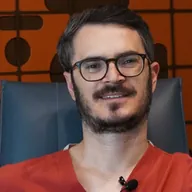
Medically reviewed by
Specialist in Aesthetic, Plastic and Reconstructive Surgery
- Specialist since 2017
- Member of TPRECD
- Ataşehir, Istanbul
- Türkçe · English · Deutsch
Op. Dr. Ali Çetinkaya is a specialist in Plastic, Reconstructive and Aesthetic Surgery. Member of TPRECD (Turkish Society of Plastic, Reconstructive and Aesthetic Surgeons). He completed his residency in 2017 and practices at his private clinic in Ataşehir, Istanbul, specializing in deep plane facelift, neck lift, rhinoplasty, and eyelid surgery (blepharoplasty). He offers consultations in Turkish, English, and German for international patients.
Last updated:
This page is for information and does not replace medical advice.
Sources
- ASPS — Facelift
- TPRECD — Turkish Society of Plastic, Reconstructive and Aesthetic Surgeons
- Hamra ST. The deep-plane rhytidectomy. Plast Reconstr Surg 1990;86(1):53–61. doi:10.1097/00006534-199007000-00008
- Jacono AA, Alemi AS, Russell JL. A Meta-Analysis of Complication Rates Among Different SMAS Facelift Techniques. Aesthet Surg J 2019;39(9):927–942. doi:10.1093/asj/sjz045
- Khoury S, Almubarak Z, Khan H, et al. The Deep Plane versus SMAS Facelift: A Systematic Review and Meta-Analysis. Aesthetic Plast Surg 2025;49(21):5895–5903. doi:10.1007/s00266-025-05118-x
- Mortada H, et al. Evolution of Superficial Muscular Aponeurotic System Facelift Techniques: A Comprehensive Systematic Review of Complication Rates and Clinical Outcomes. JPRAS Open 2024;39:166–180. doi:10.1016/j.jpra.2023.06.003
- Fang AH, de la Torre J. A Systematic Review of Rhytidectomy Complications and Prevention Methods: Evaluating the Trends. Ann Plast Surg 2025;94:S502–S516. doi:10.1097/SAP.0000000000004272
Related procedures: temporal facelift / brow lift, ethnic facelift, temporal lift, revision facelift, vertical facelift, natural facelift, Nefertiti lift.


